Article: Do I Really Have to Filter My Shower Water?
Do I Really Have to Filter My Shower Water?
You filter the water you drink. Most people have never thought about the water they stand in for ten minutes a day, at 100°F, with every pore open.
What's in it
Municipal water in the US is treated to be safe to drink, and it is. Safe to drink is a chemistry standard about what happens in your gut. It says nothing about what happens on your skin and hair.
The main thing utilities add is chlorine (or chloramine, which is chlorine bonded to ammonia so it lasts longer in the pipes). It kills bacteria. It also strips sebum — the natural oil that keeps skin supple and holds the hair cuticle flat. Showering in it daily is a slow, consistent dry-out.
Then there's hardness: dissolved calcium and magnesium picked up from the ground. Hard water leaves a mineral film on skin and hair that soap doesn't fully rinse. That's the “squeaky but tight” feeling, and the dullness in hair that no conditioner seems to fix.
Heavy metals like lead and copper usually come from the building, not the plant — old solder, old pipes. Which means they often don't appear in your utility's published report at all.
Why the shower specifically
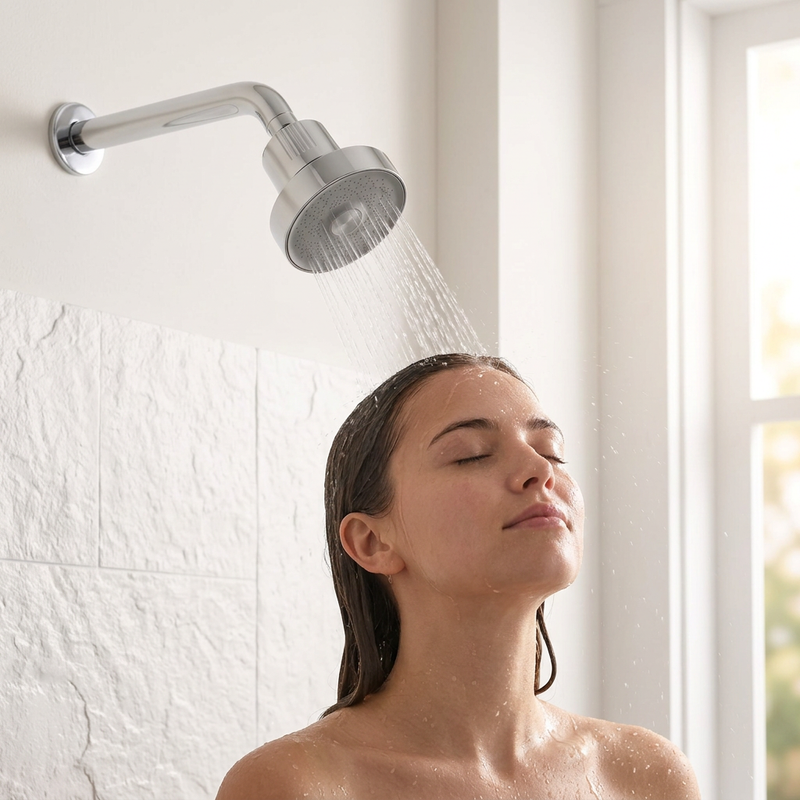
Heat opens pores and raises absorption. Steam turns chlorine by-products into something you breathe. And unlike a glass of water, exposure is across your whole body, every day, for years.
A filtered showerhead doesn't change the water in your building. It changes the last two inches before it reaches you — which, for skin and hair, is the only part that matters.
The short answer
If your hair is frizzier, your color fades faster, or your skin feels tight after showering — and it's worse in some cities than others — your water is a variable you haven't controlled for yet. Check what's in yours, then decide.